When to Repair vs. Replace Your Commercial Flat Roof: A Property Manager's Guide
As a commercial property manager or building owner, the integrity of your flat roof is paramount. It protects your assets, tenants, and operations from the elements. When you spot a leak or visible damage, the immediate question is always: can we repair it, or is it time for a complete replacement?
With 22 years of experience walking commercial roofs in Birmingham, I've seen it all — and the answer isn't always straightforward. This guide will help you understand the critical factors in making that decision.
Understanding the Nature of the Damage
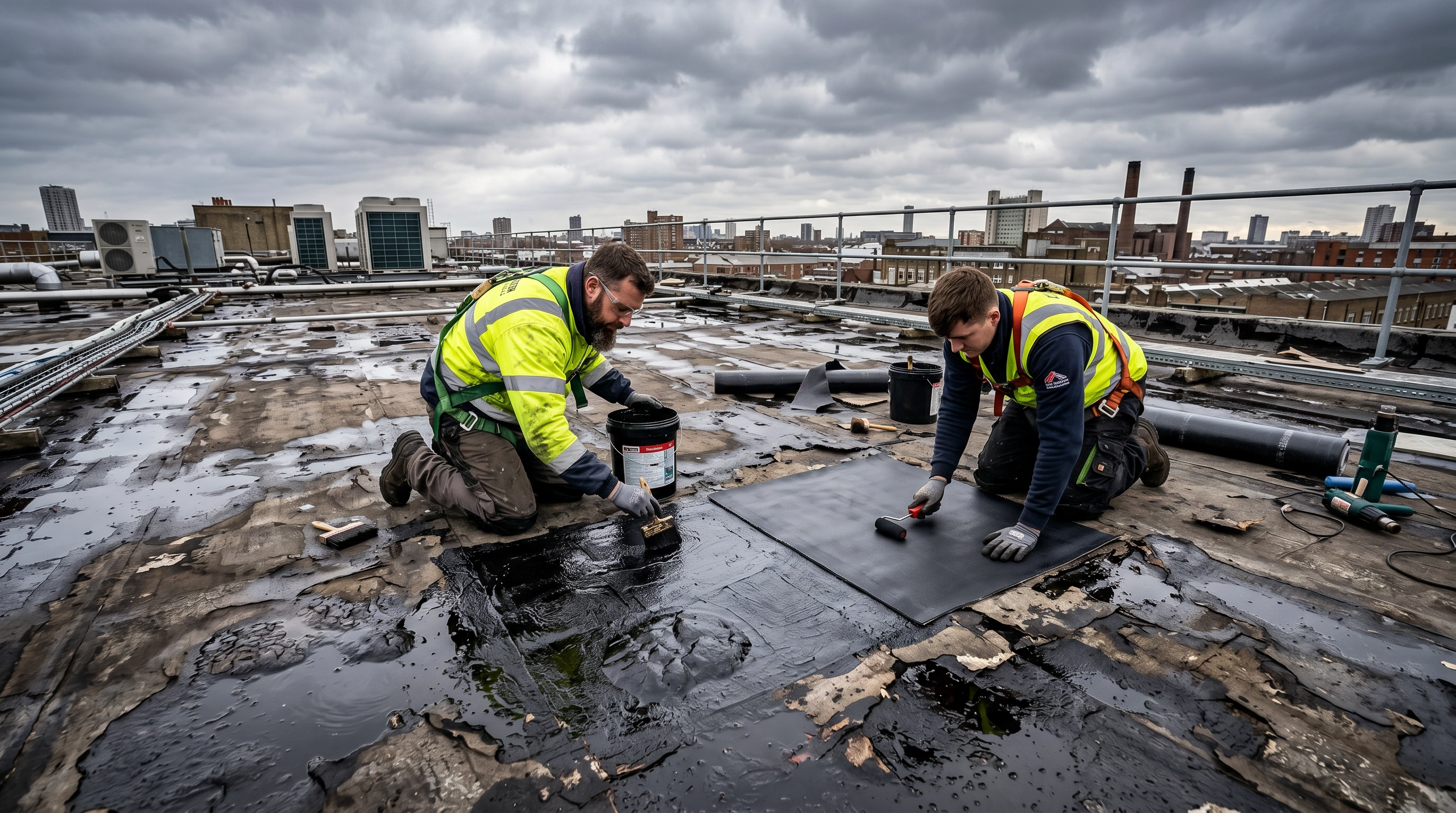
The first step is a thorough assessment of the damage. A small, isolated puncture or tear from falling debris might be a prime candidate for a targeted repair. These are often quick fixes that can extend the life of your roof without significant investment. However, widespread issues indicate a deeper problem.
Common Repairable Issues:
Minor Punctures or Tears: Often caused by foot traffic, tools, or wind-blown debris. If the membrane around the damage is still pliable and in good condition, a patch can be highly effective.
Localized Blistering: Small blisters, especially if caught early, can sometimes be repaired by cutting them open, drying the area, and re-adhering the membrane.
Failing Seams: If only a few linear feet of seams are compromised due to adhesive failure or age, they can often be re-sealed or reinforced.
Signs Your Roof Needs More Than a Patch
While emergency patches can buy you time, they aren't a long-term solution for systemic failures. Here are clear indicators that a full replacement is likely the more prudent course of action:
Widespread Water Ponding: If water consistently pools in multiple areas for more than 48 hours after a rain, it indicates structural issues or membrane degradation that a simple patch cannot fix. This is particularly problematic in Alabama's humid climate, where standing water accelerates mold growth and membrane breakdown.
Extensive Blistering, Cracking, or Alligatoring: These are signs of an aging roof membrane that has lost its elasticity and protective qualities. Patching one area will likely lead to another failing soon after.
Multiple Leaks: A single leak might be repairable, but if you're experiencing leaks in various locations, it points to a compromised roof system rather than isolated incidents.
Age of the Roof: Most commercial flat roofs have a lifespan of 15–25 years, depending on the material and maintenance. If your roof is nearing or past its expected life, even minor damage can signal the end of its functional service.
High Energy Bills: A sudden, unexplained increase in heating or cooling costs can indicate that your roof's insulation has been compromised by moisture infiltration, a systemic problem that patching alone won't solve.
The Cost Equation: Repair vs. Replace
It's tempting to always choose the cheaper short-term option. But repeated repairs on a failing roof can quickly add up to more than a replacement would have cost — and you still end up replacing it anyway. A good rule of thumb: if repair costs exceed 25–30% of the replacement cost, and the roof is more than 15 years old, replacement is almost always the better financial decision.
That said, every roof is different. The only way to make an informed decision is to have someone who knows commercial flat roofing walk your roof and give you a straight answer. Not a sales pitch — a real assessment.
Making the Right Call for Your Building
At Sweet Commercial Roofing, I personally walk every roof before writing a scope. I don't do residential work, and I don't use subcontracted core crews. My job is to give you the honest picture — whether that's a targeted repair that buys you five more years, or a replacement plan that protects your building for the next two decades.
Call 123-456-7890 or email [email protected]. We'll walk your roof together and give you a straight answer.